


Aviso amigável: Este texto contém doses cavalares de aspas, uso intenso da palavra “real” e do verbo “poder”. Isso foi proposital para deixar claro que estamos lidando com o que talvez aconteça no futuro, não cravando verdades absolutas. Apesar de saber que vocês depositam em mim essa confiança ABSOLUTA de prever o futuro.
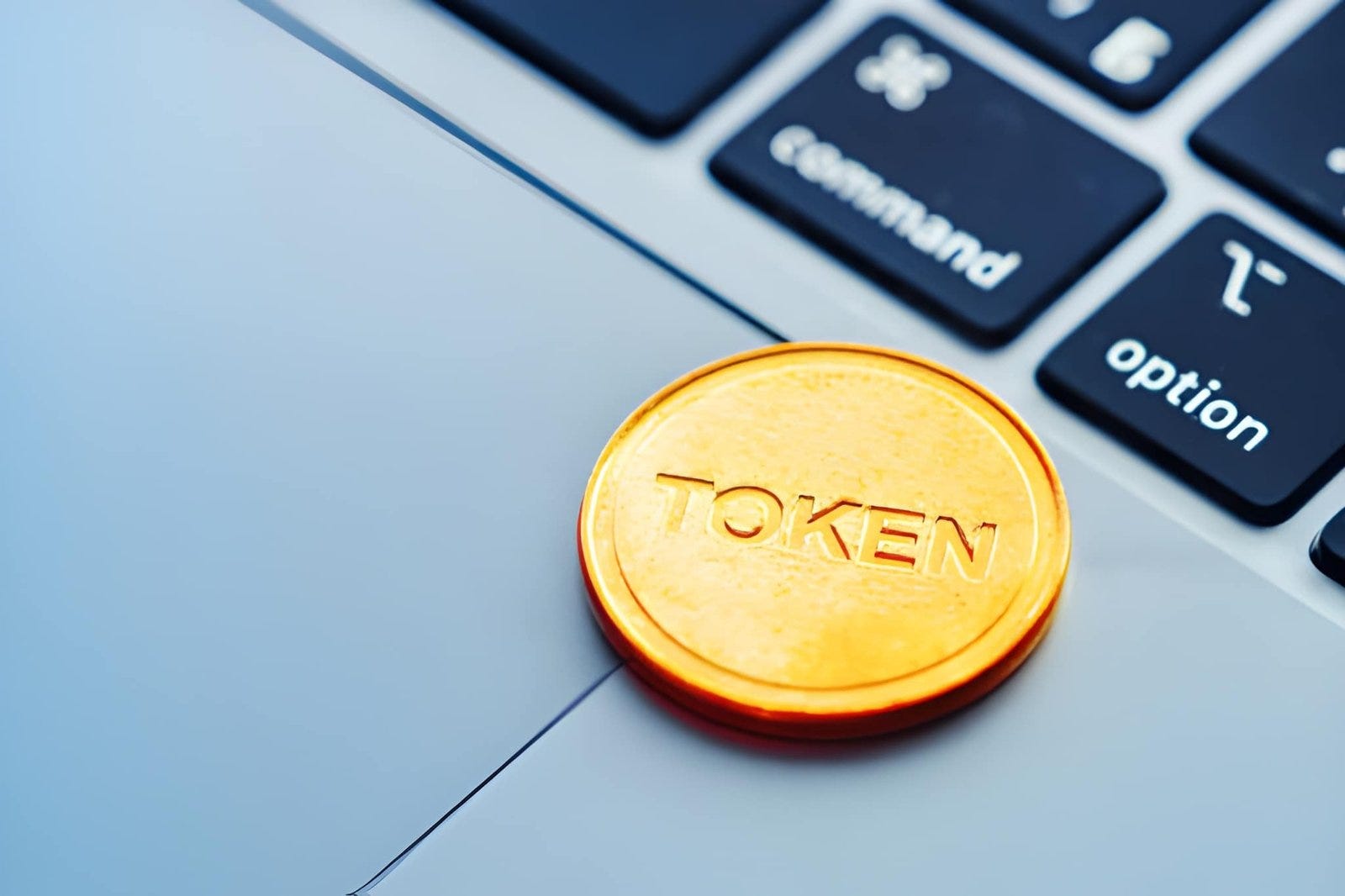
Sabe aquele ditado de que “tempo é dinheiro”? No mundo da tecnologia de hoje, essa frase mudou. Agora, “cérebro de computador é dinheiro”. E a nota de 100 desse novo sistema financeiro tem nome: o token.
A gente está muito acostumado com o dinheiro tradicional. Você vai à padaria e paga o pão com Pix. Se viaja para fora, compra dólares. A nossa ideia de riqueza sempre esteve ligada a governos, bancos ou, mais recentemente, às criptomoedas. Mas tem um movimento silencioso ganhando muita força no Vale do Silício que propõe uma loucura fascinante: a moeda mais valiosa do futuro será a capacidade de fazer uma Inteligência Artificial pensar.
E pode fazer muito sentido.
Mas afinal, o que é um “Token”?
Pense na época dos fliperamas ou dos telefones públicos antigos (old-school, eu sei). Você precisava colocar uma “ficha” para a máquina funcionar, certo? No universo da Inteligência Artificial, o “token” é exatamente isso: a ficha que faz a máquina trabalhar.
Sempre que o ChatGPT escreve uma receita de bolo ou resume um texto para você, ele não lê palavras inteiras como nós. Ele quebra o texto em pedacinhos. Cada pedacinho de palavra é um token. Para gerar uma resposta longa, a inteligência artificial gasta milhares de tokens.
O grande pulo do gato é: gerar esses tokens exige uma força bruta gigantesca de computadores de última geração operando nos bastidores. Custa caro, gasta energia e exige equipamentos escassos. Portanto, cada token tem um valor real atrelado ao custo da máquina e da eletricidade. E é aí que ele começa a virar dinheiro.
O novo “padrão-ouro”
Antigamente, as notas de dinheiro tinham seu valor garantido pelo ouro que um país guardava no cofre (padrão Breton Woods e depois a quebra desse padrão em 71). Grandes empresários da tecnologia defendem que a gente deveria parar de medir o valor das coisas só em dólares e começar a medir em tokens.
A nova riqueza: se a Inteligência Artificial é a tecnologia mais importante do século, ter acesso à capacidade de gerar tokens é o recurso mais valioso do momento.
Uma moeda sem fronteiras: gerar mil tokens em um supercomputador tem o mesmo resultado aqui no Brasil, no Japão ou no Alasca. É uma “moeda” que SUPOSTAMENTE não sofre com a inflação do governo, não depende de políticos e não tem taxa de câmbio. É um valor puro e universal. Viu o supostamente em maiúsculo, né? É importante. Mais à frente, explico isso em detalhe.
Isso já é real: hoje, pessoas “alugam” a potência de seus computadores caseiros para gerar tokens e recebem por isso. IAs também já “pagam” umas às outras com tokens para acessar dados, sem que nenhum humano precise autorizar a transação.
O custo físico: a guerra pela energia e o token limpo
Mas se o valor do token é universal, o custo para fabricá-lo não é. Para o computador processar instruções de IA e funcionar, ele precisa de eletricidade. Muita eletricidade.
O valor da conta de luz varia de país para país. Isso significa que lugares com energia barata e abundante se tornam as novas “casas da moeda”. Quem tem energia sobrando pode produzir tokens a um custo baixíssimo e inundar o mercado.
E surge uma nova questão: a moralidade do dinheiro. Da mesma forma que evitamos empresas que poluem, o mercado já começa a se perguntar: esse token foi gerado por uma usina de carvão na Ásia ou por energia limpa (eólica ou hidrelétrica) no Brasil? No futuro, o “token verde” pode valer muito mais do que o “token sujo”. Muitas aspas nesse texto todo, né? O exemplo mesmo tem os dias contados: a China está se tornando o grande centro de produção de energia limpa com suas fazendas de painéis solares.
A geopolítica entra em cena: o fim do Dólar?
Tudo isso ganha urgência quando olhamos para a recente crise entre os Estados Unidos e o Irã. Sempre que o clima fecha no Oriente Médio, ressurge o debate sobre os petrodólares (o petróleo sendo vendido apenas em moeda americana).
O dólar está perdendo a confiança mundial. E se ele cair, o que sobra? As opções tradicionais não empolgam:
O Yuan (China): Muita gente desconfia do banco central chinês por ser controlado por um regime fechado, onde as regras podem mudar da noite para o dia (no caso de regimes fechados, isso é literal).
Agora, me dá a mão para atravessar essa rua, porque temos também que nos perguntar: o que é confiança ou transparência no mundo de hoje? Depositar fé cega no FED (o banco central americano) também tem seus riscos. O FED é uma estrutura onde filiais regionais pertencem a bancos privados e existe uma “porta giratória” constante entre figurões de Wall Street e diretores do governo. No fim, a suposta liberdade americana muitas vezes é um sistema onde grandes corporações ditam as regras em troca de doações para campanhas políticas. O telhado de vidro é imenso dos dois lados.
O Euro (Europa): O bloco enfrenta estagnação, uma população envelhecendo e ficou para trás na corrida tecnológica. É uma colcha de retalhos política que treme a cada crise interna.
Nesse vácuo, os tokens de IA aparecem como uma alternativa.
No entanto, temos que lembrar sobre a história do dinheiro: é absolutamente impossível falar de dinheiro sem falar de confiança. E aqui então, vale a pena ampliar um pouco o texto e traçar como começou esse vínculo entre confiança e dinheiro.
Confiança e Dinheiro
1. Confiança no Registro (As Tábuas de Argila)
Muito antes de o primeiro rei pensar em derreter ouro para fazer moedas, a humanidade já usava o dinheiro em formato de crédito. Na antiga Mesopotâmia, há mais de 5 mil anos, os sumérios usavam pequenas peças ou tábuas de argila para anotar quem devia o quê para quem. Se você deixasse sua colheita de cevada no templo (que era o “banco” da época), o escriba te dava pequenos pedaços moldados de barro chamados pelos arqueólogos de, pasmem, tokens. Claro que o sumério não falava token. Mas já que estamos atravessando essa rua, segura na minha mão de novo para a viagem ser completa:
Quem os batizou assim foram os arqueólogos: A palavra “token” foi escolhida na década de 1970 pela arqueóloga franco-americana Denise Schmandt-Besserat. Foi ela quem descobriu e provou que essas pecinhas de argila geométricas não eram brinquedos ou amuletos, mas sim um sistema complexo de contabilidade e a verdadeira origem da escrita. Para explicar isso ao mundo moderno, ela publicou estudos chamando essas peças de “clay tokens” (tokens de argila). O Vale do Silício escolheu a palavra em inglês “token” (que significa ficha, símbolo ou representativo de valor) para o cérebro da Inteligência Artificial e para as criptomoedas. Sem saber (ou sabendo, vai saber...), eles usaram exatamente a mesma palavra que os historiadores já usavam para descrever a primeira tecnologia financeira inventada pela humanidade há 5.000 anos.
Voltando, aquele pedaço de terra seca não tinha valor físico nenhum. A riqueza ali era a confiança no registro. A certeza de que a sociedade e o templo reconheciam que você tinha aquele crédito para trocar por óleo ou roupas no futuro. Ou seja, o primeiro dinheiro da história não era uma mercadoria preciosa, mas sim um grande livro-caixa público de dívidas e créditos. Ironicamente, é exatamente a mesma lógica que sustenta as criptomoedas e o mundo digital de hoje.
2. Confiança no material (O Ouro)
Lá no começo, a confiança era física. Você aceitava uma moeda de ouro em troca de uma vaca porque confiava na escassez do metal. O ouro não enferruja, não perde o brilho e é difícil de achar. A confiança não estava em uma pessoa, estava na natureza daquele material.
3. Confiança na instituição (O Estado)
Hoje, a nota de R$ 100 ou de US$ 100 não vale nada fisicamente. É só um pedaço de papel de algodão colorido (papo hippie que o pai banca as viagens, dos dois tipos). Você aceita esse papel porque confia que, por trás dele, existe um Estado (um Banco Central) e leis que garantem o seu valor (papo de sociólogo sobre como somos vítimas do contrato social e como aceitar essa garantia estatal é admitir que o sistema financeiro global é, no fim das contas, um grande delírio coletivo institucionalizado).
Se a confiança no país quebra, como aconteceu na Venezuela ou no Zimbábue, o dinheiro vira lixo instantaneamente, mesmo que a nota continue a mesma.
4. Confiança na utilidade e na matemática (tokens)
É aqui que os entusiastas dos tokens de IA tentam mudar o jogo. Eles argumentam que estamos substituindo a “confiança no político” pela “confiança na matemática e na utilidade”.
O lastro real: um token de IA tem um valor intrínseco porque ele executa um trabalho no mundo real (ele processa dados, gera soluções, pensa).
Código é a lei: você não precisa confiar no bom humor do presidente do Banco Central. Você confia que a rede de computadores vai rodar o código de forma transparente e que a energia gasta para gerar aquele processamento tem um custo inegável.
O problema dos Tokens
Claro, os tokens também têm riscos. Se adotarmos essa moeda, tiramos o poder dos políticos e entregamos para as Big Techs. Teríamos nossa economia supostamente controlada por bilionários do Vale do Silício que são donos da infraestrutura. Além disso, uma crise de chips em Taiwan ou um apagão energético faria essa “moeda” quebrar/desvalorizar instantaneamente.
O que isso muda na sua vida?
Você pode ficar tranquilo: ninguém vai te obrigar a pagar o cafezinho com tokens na semana que vem. O real e o Pix continuam firmes (quero dizer, texto feito em Maio de 2026).
Mas, enquanto as superpotências brigam pelo petróleo e por moedas antigas, o mundo digital já está criando sua própria economia. Marketeiros podem até dizer que a capacidade de gerar inteligência artificial virou o novo petróleo. O dinheiro de amanhã talvez não tenha a cara de nenhum presidente impressa nele. Quando a sua empresa decidir pagar o seu bônus de fim de ano em “capacidade de processamento” para você usar como quiser, você vai saber que o futuro finalmente chegou.
Referências Bibliográficas:
Sobre a origem da palavra Token há 5.000 anos: SCHMANDT-BESSERAT, Denise. Before Writing: Volume I: From Counting to Cuneiform. Austin: University of Texas Press, 1992. (O estudo da arqueóloga que descobriu as pecinhas de argila que funcionavam como o primeiro dinheiro e contabilidade do mundo).
Sobre a ideia de que “poder de processamento” é dinheiro: ALTMAN, Sam. Moore’s Law for Everything (e entrevistas recentes). (Debates do CEO da OpenAI sobre como o poder de computação será o recurso mais valioso do futuro e a base da nova economia).
Sobre o aluguel de computadores na vida real: RENDER NETWORK. The Render Network Whitepaper: A Peer-to-Peer GPU Compute Network. Disponível em: https://rendernetwork.com. (Documentação do projeto pioneiro que permite que pessoas comuns aluguem suas placas de vídeo ociosas em troca de moedas digitais).
Forget the Dollar and Bitcoin: Why “AI Tokens” Might Be the New Currency
Friendly warning: This text contains massive doses of quotation marks. As well as intensive use of the word “real”, and “might” (or “could”). This was done on purpose to make it clear that we are dealing with what perhaps will happen in the future, not carving absolute truths in stone. As much as I know you have ABSOLUTE, blind faith in my fortune-telling skills.
You know that saying “time is money”? In today’s tech world, that phrase has changed. Now, “computer brain is money.” And the $100 bill of this new financial system has a name: the token.
We are very used to traditional money. You go to the bakery and pay for bread with Apple Pay or Venmo. If you travel abroad, you buy Euros. Our idea of wealth has always been linked to governments, banks, or, more recently, cryptocurrencies. But there’s a silent movement gaining a lot of traction in Silicon Valley proposing a fascinatingly crazy idea: the most valuable currency of the future will be the ability to make an artificial intelligence think.
And it might make a lot of sense.
But after all, what is a token?
Think back to the days of arcades or old public payphones (old-school, I know). You had to put a “token” in for the machine to work, right? In the artificial intelligence universe, the “token” is exactly that: the coin that makes the machine work.
Whenever ChatGPT writes a cake recipe or summarizes a text for you, it doesn’t read whole words like we do. It breaks the text into little pieces. Each little piece of a word is a token. To generate a long response, the artificial intelligence spends thousands of tokens.
The real kicker is generating these tokens requires a gigantic brute force of state-of-the-art computers operating behind the scenes. It’s expensive, wastes energy, and requires scarce equipment. Therefore, each token has a real value pegged to the cost of the machine and the electricity. And that’s where it starts to become money.
The new gold standard
In the old days, paper money had its value guaranteed by the gold a country kept in a vault (the Bretton Woods system and the subsequent end of that standard in ‘71). Big tech entrepreneurs argue that we should stop measuring the value of things only in dollars and start measuring in tokens.
The new wealth: If artificial intelligence is the most important technology of the century, having access to the capacity to generate tokens is the most valuable resource of the moment.
A borderless currency: Generating a thousand tokens on a supercomputer has the same result here in Brazil, in Japan, or in Alaska. It is a “currency” that SUPPOSEDLY doesn’t suffer from government inflation, does not depend on politicians, and has no exchange rate. It is a pure and universal value. You saw the supposedly in all caps, right? It’s important. I’ll explain that in detail later.
This is already real, and today, people “rent” the power of their home computers to generate tokens and get paid for it. AIs are also already “paying” each other with tokens to access data, without any human needing to authorize the transaction.
The physical cost: the war for energy and the clean token
But if the token’s value is universal, the cost to manufacture it is not. For the computer to process AI instructions and work, it needs electricity. A lot of electricity.
The cost of the power bill varies from country to country. This means that places with cheap and abundant energy become the new “mints.” Whoever has surplus energy can produce tokens at a very low cost and flood the market.
And a new question arises: the morality of money. In the same way we avoid companies that pollute, the market is already starting to ask: was this token generated by a coal plant in Asia or by clean energy (wind or hydroelectric) in Brazil? In the future, the “green token” might be worth much more than the “dirty token”. Lots of quotes in this whole text, huh? The example itself has its days numbered: China is becoming the great hub for clean energy production with its massive solar panel farms.
Geopolitics enters the scene: the end of the Dollar?
All this gains urgency when we look at the recent crisis between the United States and Iran. Whenever the climate gets tense in the Middle East, the debate over petrodollars (oil being sold only in American currency) resurfaces.
The dollar is losing global trust. And if it falls, what’s left? The traditional options aren’t exciting:
The Yuan (China): Many people distrust the Chinese central bank for being controlled by a closed regime, where rules can change overnight (in the case of closed regimes, this is literal).
Now, stick with me here, because we also have to ask ourselves: what is trust or transparency in today’s world? Putting blind faith in the FED (the American central bank) also has its risks. The FED is a structure where regional branches belong to private banks and there is a constant “revolving door” between Wall Street bigwigs and government directors. In the end, the supposed American freedom is often a system where huge corporations dictate the rules in exchange for political campaign donations. People who live in glass houses shouldn’t throw stones.
The Euro (Europe): The bloc faces stagnation, an aging population, and has fallen behind in the tech race. It is a political patchwork quilt that shivers with every internal crisis.
In this vacuum, AI tokens appear as an alternative.
Trust and Money
However, we must remember the history of money: it is absolutely impossible to talk about money without talking about trust. And here, it is worth expanding the text a bit and tracing how this bond between trust and money began.
1. Trust in the Record (The Clay Tablets)
Long before the first king thought of melting gold to make coins, humanity was already using money in the form of credit. In ancient Mesopotamia, over 5,000 years ago, the Sumerians used small clay pieces or tablets to record who owed what to whom. If you left your barley harvest at the temple (which was the bank of the time), the scribe would give you small molded pieces of clay called, by archaeologists, brace yourselves, tokens. Of course, the Sumerian didn’t speak the word token. But since we are going down this rabbit hole, bear with me so the trip is complete:
Who named them that were the archaeologists: The word “token” was chosen in the 1970s by the French-American archaeologist Denise Schmandt-Besserat. She was the one who discovered and proved that these little geometric clay pieces were not toys or amulets, but a complex accounting system and the true origin of writing. To explain this to the modern world, she published studies calling these pieces “clay tokens”. Silicon Valley chose the English word “token” (meaning a chip, symbol, or representation of value) for the brain of artificial intelligence and for cryptocurrencies. Without knowing (or knowing, who knows...), they used exactly the same word that historians already used to describe the first financial technology invented by humanity 5,000 years ago.
Coming back, that piece of dry dirt had no physical value whatsoever. The wealth there was the trust in the record. The certainty that society and the temple recognized you had that credit to exchange for oil or clothes in the future. In other words, the first money in history wasn’t a precious commodity but a large public ledger of debts and credits. Ironically, it is exactly the same logic that sustains cryptocurrencies and the digital world today.
2. Trust in the Material (Gold)
In the beginning, trust was physical. You accepted a gold coin in exchange for a cow because you trusted the scarcity of the metal. Gold doesn’t rust, doesn’t lose its shine, and is hard to find. The trust wasn’t in a person; it was in the nature of that material.
3. Trust in the Institution (The State)
Today, the R$ 100 or US$ 100 bill has no physical value. It’s just a piece of colored cotton paper (hippie talk from someone whose dad pays for their trips, both kinds). You accept this paper because you trust that, behind it, there is a State (a Central Bank) and laws that guarantee its value (sociologists talk about how we are victims of the social contract and how accepting this state guarantee is admitting that the global financial system is, in the end, a massive institutionalized collective delusion). If trust in the country breaks, as happened in Venezuela or Zimbabwe, the money turns to trash instantly, even if the bill remains the same.
4. Trust in Utility and Mathematics (Tokens)
This is where AI token enthusiasts try to change the game. They argue that we are replacing “trust in the politician” with “trust in mathematics and utility.”
The real backing: An AI token has intrinsic value because it performs work in the real world (it processes data, generates solutions, thinks).
Code is law: You don’t need to trust the good mood of the Central Bank president. You trust that the computer network will run the code transparently and that the energy spent to generate that processing has an undeniable cost.
The Problem with Tokens
Of course, tokens also have risks. If we adopt this currency, we take power away from politicians and hand it over to Big Tech. We would have our economy supposedly controlled by Silicon Valley billionaires who own the infrastructure. Furthermore, a chip crisis in Taiwan or an energy blackout would cause this “currency” to crash/devalue instantly.
What does this change in your life?
You can rest easy: nobody will force you to pay for your coffee with tokens next week. The US dollar and your credit card (I mean, text written in May 2026).
But, while superpowers fight over oil and old currencies, the digital world is already creating its own economy. Marketers can even say that the ability to generate artificial intelligence has become the new oil. Tomorrow’s money might not have any president’s face printed on it. When your company decides to pay your end-of-the-year bonus in “processing capacity” for you to use however you want, you will know that the future has finally arrived.
References
On the origin of the word “token” 5,000 years ago: SCHMANDT-BESSERAT, Denise. Before Writing: Volume I: From Counting to Cuneiform. Austin: University of Texas Press, 1992. (The study by the archaeologist who discovered the small clay pieces that functioned as the world’s first form of money and accounting).
On the idea that “computing power” is money: ALTMAN, Sam. Moore’s Law for Everything (and recent interviews). (Discussions by the OpenAI CEO on how compute will be the most valuable resource of the future and the foundation of the new economy).
On renting out computer power in the real world: RENDER NETWORK. The Render Network Whitepaper: A Peer-to-Peer GPU Compute Network. Available at: https://rendernetwork.com. (Documentation of the pioneering project that allows everyday people to rent out their idle graphics cards in exchange for digital tokens).